Codeshare Flights: What It Is, How It Works & Key Differences
Last Updated on Aug 4th, 2026 by Kamal Kishor, Leave a Comment
Most of the time, the airline that sells you the ticket is the same one that flies the plane. You book Air Canada, and you fly with Air Canada. Simple.
But that’s not always the case.
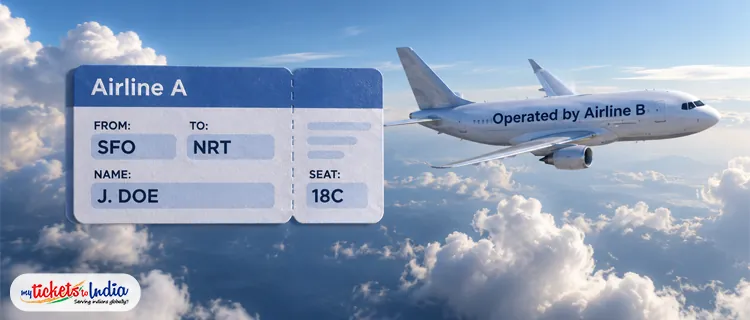
Sometimes, airlines work together by flying each other’s aircraft to offer you more travel options. These are called “codeshare flights,” where you book with one airline, but the aircraft, crew, and even your seat are from another airline.
This may sound a little confusing to new travellers. However, it’s a very standard practice in the aviation industry, especially on international routes where many airlines are involved. To put it simply, a codeshare flight means that you book with one airline, but you may be flying with another.
What Is A Codeshare Flight and Its Agreement?
As we know, a codeshare flight is like a collaborative arrangement between two or more airlines sharing the same flight. This partnership allows airlines to offer a wider range of destinations and services to their passengers. And the agreement that facilitates this collaboration is known as a codeshare agreement.
This agreement clearly states the roles of airlines. One airline actually operates the flight and handles all the operations. This is referred to as the “operating airline.” The other airline has that same flight under its name and flight number. This is referred to as the “marketing airline.”
Why Do Airlines Do This?
Codeshare partnerships provide airlines the opportunity to fly more routes, improve connections, and offer more flexible itineraries to customers without having to increase their fleet.
Here’s a pro tip: In your booking confirmation email, look for the phrase “Operated by.” That small line will tell you which airline is flying the flight and where to check in, drop off your bags, and board.
Codeshare Flight vs Regular Flight: What’s the Difference?
When you book a codeshare flight, keep in mind that you aren’t taking a normal flight. Its terms and conditions may vary compared to those.
| Feature | Regular Flight (Same Airline) | Codeshare Flight |
| Marketing airline | The airline you booked with | The airline you booked with |
| Operating airline | Same as marketing airline | A different airline |
| Check-in location | Airline’s check-in counters | Operating airline’s counters |
| Loyalty points | Usually earns on the booked airline | May earn on booked airline (check policy) |
| Compensation for delays | The booked airline is responsible | Operating airline is responsible |
| In-flight service | Consistent with the booked airline | Follows the operating airline standards. |
Real Example of a Codeshare Flight
Suppose you are travelling from Toronto to Delhi on Air Canada.
- According to your ticket, the flight number is Air Canada (AC flight number)
- First leg: Toronto to Frankfurt (operated by Lufthansa)
- Second leg: Frankfurt to Delhi (operated by Air India)
Despite booking your trip with Air Canada, the actual airline service for each flight depends on the operating airlines. This is a standard airline “codeshare” flight, particularly on multiple international city routes.
Marketing Carrier vs. Operating Carrier: Who Does What?
In every codeshare flight agreement, two players, or we could say airlines, are involved. Each of them follows its own norms, and here’s how they most likely divide responsibility.
| Role | What They Do |
| Marketing Carrier (the seller) | Puts its flight number on the ticket. Markets and sells the flight. Handles booking changes and customer service. Collects payment. |
| Operating Carrier (the doer) | Provides the actual plane, pilots, and cabin crew. Manages check‑in, boarding, and ground operations. Determines onboard services (meals, entertainment, seat comfort). Is legally responsible for delays, cancellations, and compensation under APPR. |
⚠️ Important: If your codeshare flight is late or cancelled, you need to file your claim for compensation with the operating carrier, not the airline you booked with. The Canadian Transportation Agency says that the operating carrier is legally responsible for passenger rights under Canada’s Air Passenger Protection Regulations.
Why Do Airlines Use Codeshare Agreements?
Airlines codeshare to expand their networks without adding new planes. Here’s why:
- Reach More Destinations
Air Canada can sell you a ticket to a small European city it doesn’t fly to directly by partnering with Lufthansa or Brussels Airlines. You get a single booking, one ticket, and seamless connections.
- Fill More Seats
A codeshare deal is a way for airlines to fill empty seats by leveraging each other’s customer bases. The fuller the planes are, the lower the operating costs.
- Offer Better Schedules
A codeshare is an agreement between two airlines that allows for more flights to be operated on the same route and at different times of the day than they would have had otherwise, without the need for either airline to fly additional aircraft.
- Compete More Effectively
Smaller airlines can rival the large ones by offering tickets through their partners’ huge network.
Did you know? Together, Air Canada and Emirates have already provided services to more than 550,000 passengers on 56 routes to Canada, the USA, and worldwide destinations.
Codeshare Flights Between Canada and India
Codeshare flights are quite prevalent in long-haul international flights, such as Canada to India. Air Canada, Air India, Lufthansa, and United are airlines that frequently work in tandem with codeshare agreements to provide smoother connectivity.
For instance, you can book a ticket from Toronto to Delhi on Air Canada, while the flight between Toronto and New Delhi may be made using Lufthansa or Air India.
This setup enables travellers to:
- Book a single ticket for multi-airline journeys
- Get better route options and pricing
- Fly effortlessly from continent to continent.
Always confirm with the operating airline, particularly if the flight is a long-haul codeshare between Canada and India, as the regulations for carry-on may differ from one airline to another and services on board may differ.
Types of Codeshare Agreements
There are various forms of codeshare and codeshare services, and not all are the same. The most prevalent ones you will come across are these:
- Soft Block Codeshare (Basic Seat Sharing)
In this type, one airline purchases a specific number of seats on another airline and then sells them as its own. Both airlines receive a share of the revenue, but service is separate. Some of the experience may differ between the marketing and operating carriers.
To share: Regional partnerships, seasonal routes.
- Hard Block Codeshare (Deeper Integration)
In this, the airlines share profits and coordinate fares, schedules, and frequent flyer programs. Services are more integrated, and rebooking on the partner will be triggered when a service is delayed on the other carrier.
Available for: Big airline alliances such as Star Alliance, SkyTeam, and Oneworld.
- Free Flow Codeshare (Full Partnership)
In this, the airlines treat each other as one airline, with a single set of service standards, shared revenue, and coordinated pricing. This practice frequently occurs in joint business ventures or when airlines are granted antitrust immunity.
Usual in: Transatlantic joint ventures, such as Air Canada/Lufthansa/United.
Did you know? Some codeshare relationships are so extensive that you will not find the airline’s flight number at the gate. Your marketing carrier’s code and logo will be visible only.
How To Spot A Codeshare Flight Before You Book
Look for these clues on any airline booking site or ticket:
- Multiple flight numbers. If the search results show two different flight numbers for the same departure time, one of them is likely a codeshare.
- The “Operated by” line. On the airline’s website, look just below the flight number. It will say something like “Operated by United Airlines.”
- Small green or blue text. Booking platforms often highlight the operating carrier in a different colour to alert you.
- Airline alliance logos. Star Alliance, SkyTeam, or oneworld logos next to a flight often indicate it’s operated by a partner airline.
💡 Pro Tip: Before you enter your credit card details, click through to the fare details. The operating carrier is always listed on the final review page.
Not sure which airline is actually operating your flight? Our team at MyTicketsToIndia can help you check the details before you book, so there are no surprises later.
The Hidden Downsides Of Codeshare Flights
Codeshare flights are convenient, but they come with a few disadvantages.
- Loyalty point complications: You might not earn full Aeroplan miles on a partner airline’s codeshare flight.
- Seat selection may not transfer: Your seat on the marketing carrier’s app may not show up on the operating carrier’s plane. Use the operating carrier’s record locator to select seats directly.
- Service inconsistencies: What you expect (meals, entertainment, seat comfort) may not match what the operating airline provides.
- Problem resolution: When something goes wrong, you often get passed between airlines: the marketing carrier says “contact the operating carrier,” and the operating carrier says “contact the marketing carrier.”
Warning: This “pass‑the‑buck” scenario happens more often than airlines admit. Always start with the operating carrier. They have final responsibility.
Your Rights Under Canadian Law (APPR & Codeshare Flights)
Under Canada’s Air Passenger Protection Regulations (APPR), your rights on a codeshare flight depend on where your flight departs.
If your flight departs from a Canadian airport:
- The operating carrier is legally responsible for your compensation, confirmed by the Canadian Transportation Agency.
- If your flight is delayed over 3 hours, cancelled, or you’re denied boarding, you must file your claim with the operating airline.
- The airline must provide meals, reasonable accommodation, and rebooking.
If your flight departs outside Canada:
- The rules of the country of departure govern your rights.
- For flights departing the US, US DOT rules apply.
- For flights departing the EU, EU Regulation 261 applies.
Did you know? For delays over 3 hours from a Canadian airport, you could be eligible for up to $1,000 in compensation from the operating carrier. So, always keep all boarding passes and communications with yourself.
How to file a complaint:
Contact the operating airline directly first. If they refuse, file a complaint with the Canadian Transportation Agency.
How To Earn Aeroplan Miles On Codeshare Flights
Not all codeshare flights earn miles equally, especially on non-alliance airline codeshare routes. Here’s a quick breakdown:
| Scenario | Can You Earn Aeroplan Miles? |
| Book Air Canada, operated by United (Star Alliance) | Yes, you earn miles normally |
| Book Air Canada, operated by Emirates (not Star Alliance) | Maybe, depending on the fare class. Also, you need to check Aeroplan’s partner chart |
| Book Air Canada, operated by Lufthansa (Star Alliance) | Yes |
| Book Air India, operated by Air Canada (Star Alliance) | Yes, you earn through the Flying Return miles |
Pro Tip: Before booking a codeshare flight, check your loyalty program’s partner earning chart. Not all codeshare legs earn miles, especially on routes where the two airlines are not in the same alliance.
Codeshare vs Interline vs Alliance Airline Partnerships
Travellers often confuse these three terms. Here’s a simple breakdown.
| Codeshare Agreement | Interline Agreement | Alliance | |
| What it does | One airline sells seats on another’s flight under its own flight number | Airlines transfer passengers and bags between their flights | Global partnership with standardized benefits across members |
| Single ticket | Yes | Yes | Yes |
| Checked bags transferred automatically | Yes | Yes | Yes |
| Marketing carrier | The airline whose flight number appears on your ticket | N/A: each segment uses the operating airline’s flight number | Highest-aligned standards |
| Frequent flyer miles | Usually earned through the marketing carrier’s program | Earned on the operating carrier for each segment | Star Alliance, SkyTeam, oneworld |
Think of it this way: A codeshare makes it look like you’re flying one airline the whole way. An interline just makes it work seamlessly when you switch airlines, but your flights keep their original carrier’s numbers.
How To Book A Codeshare Flight
- Search for flights as usual on your preferred booking website.
- Pay attention to flight numbers. If the same departure time shows two different numbers, one is a codeshare.
- Look for “Operated by” in the details. This tells you which airline actually runs the flight.
- Check baggage policies for both airlines. The operating airline’s rules apply, even if you booked with a different carrier.
- Confirm check-in location. You’ll check in with the operating airline, not the marketing carrier, even if you booked through the other airline’s site.
- Book. Then double‑check your confirmation email for the operating carrier’s name.
Smart Tips For Booking A Codeshare Flight
- Always check the operating airline before you book. One small line of text can save you from arriving at the wrong check-in counter.
- Confirm seat selection on the operating carrier’s website. Your seat may not transfer automatically. Use the operating airline’s record locator (usually a 6‑character code) to select seats directly.
- Download both airline apps. The marketing carrier’s app manages your booking. The operating carrier’s app gives real‑time gate changes and flight status.
- Check baggage rules for both airlines. The operating carrier’s rules win. Don’t rely on what the marketing carrier’s website shows.
- For compensation, contact the operating airline first. Don’t waste time with the airline you booked through.
- Check loyalty point earnings before you book. Not every codeshare flight earns full miles, especially on deep discount fares.
Frequently Asked Questions
Q: What is a codeshare flight in simple terms?
Q: What is the point of codeshare flights?
Q: How do I know if my flight is a codeshare?
Q: Who do I check in with on a codeshare flight?
Q: Are meals included on codeshare flights?
Q: Are codeshare flights direct flights?
Q: Does Air India have codeshare flights from Canada?
Final Checklist Before Booking A Codeshare Flight
- I have verified the name of the company that operates the flight.
- I know that the operating carrier will do check-in, boarding, and handling of my bags.
- I have checked baggage allowances directly with the operating airline and not the marketing airline.
- If my flight is delayed or cancelled, I know I must call the airline that is running the flight for compensation.
- I have downloaded both airline apps (marketing carrier for booking and operating carrier for flight status).
Need Help Booking A Codeshare Flight To India?
Codeshare flights can be confusing, especially when you’re trying to find the best airfare deals from Canada to India. MyTicketsToIndia specializes in routes from Canada to India. We can help you compare operating carriers, understand baggage rules, and book the right codeshare flight for your trip.
Happy flying!
Book Your Canada-to-India Flights Now
- Toronto to Mumbai Flights
- Toronto to Delhi Flights
- Toronto to Hyderabad Flights
- Toronto to Ahmedabad Flights
- Vancouver to Delhi Flights
- Calgary to Delhi Flights
- Montreal to Delhi Flights
- Edmonton to Delhi Flights
- Edmonton to Mumbai Flights
- Vancouver to Mumbai Flights
- Toronto to Chennai Flights
- Calgary to Mumbai Flights
What To Read Next
- Best And Affordable Airlines For Canada To India Flights
- When Is The Best Time To Book Your Flight From Canada To India?
- Discover The Secrets To Book Cheap Flight Tickets to India from Canada!
- Best Airlines to Canada From India In 2026
- Flight Itinerary Meaning, Details, and Explanation
- Everything About Air India Baggage Allowance – Size, Weight, and Fees
All brand names and trademarks mentioned are the property of their respective owners and are used for educational purposes only. We do not promote, endorse, or criticise any brands. Their use is solely for reference and informational context.

About Kamal Kishor | View Posts
Kamal is a passionate travel writer who brings destinations to life through his words. With years of experience and a knack for delivering impactful content, he blends creativity with insight in his writing. Growing up in Himachal, he developed a deep love for mountains, treks, and peaceful escapes. With a curious mind and an explorer’s spirit, Kamal aims to inspire readers to discover new places and create unforgettable travel experiences.